 Image 1 of 5
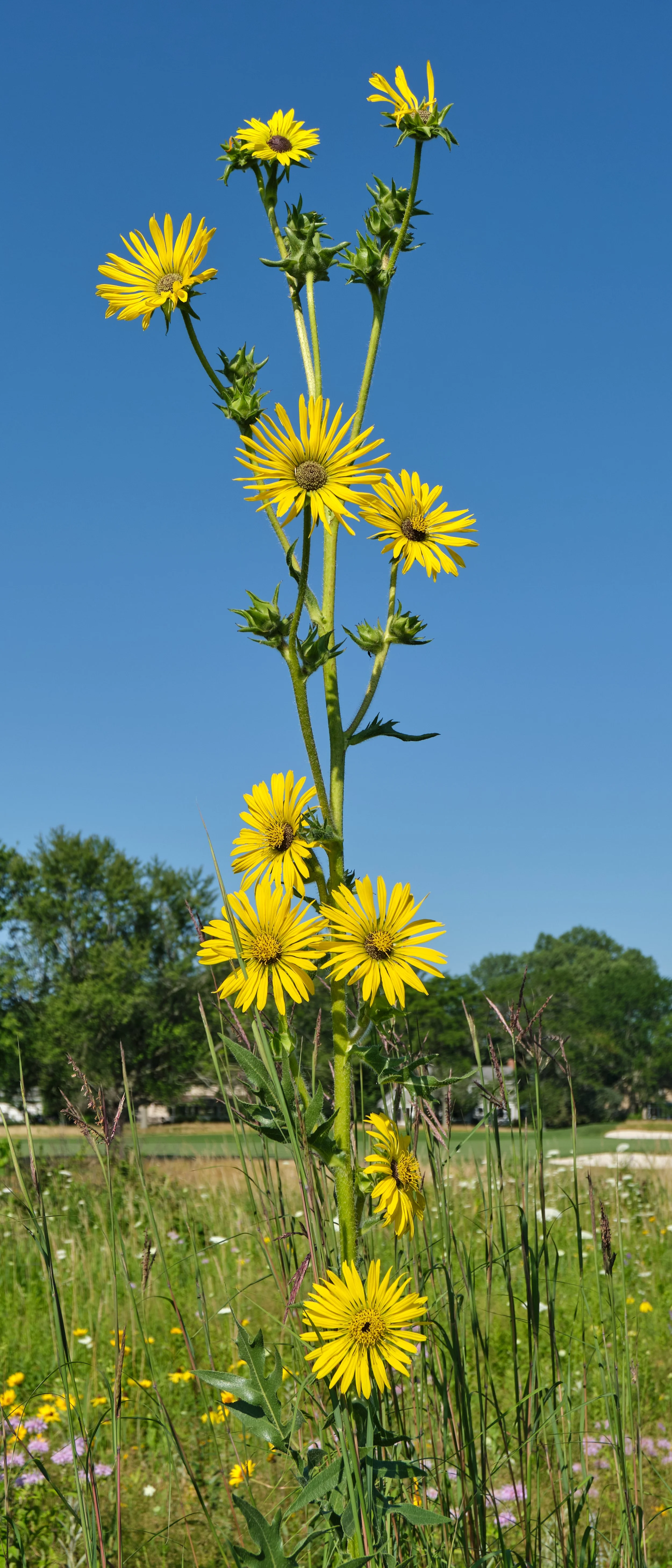 Image 2 of 5
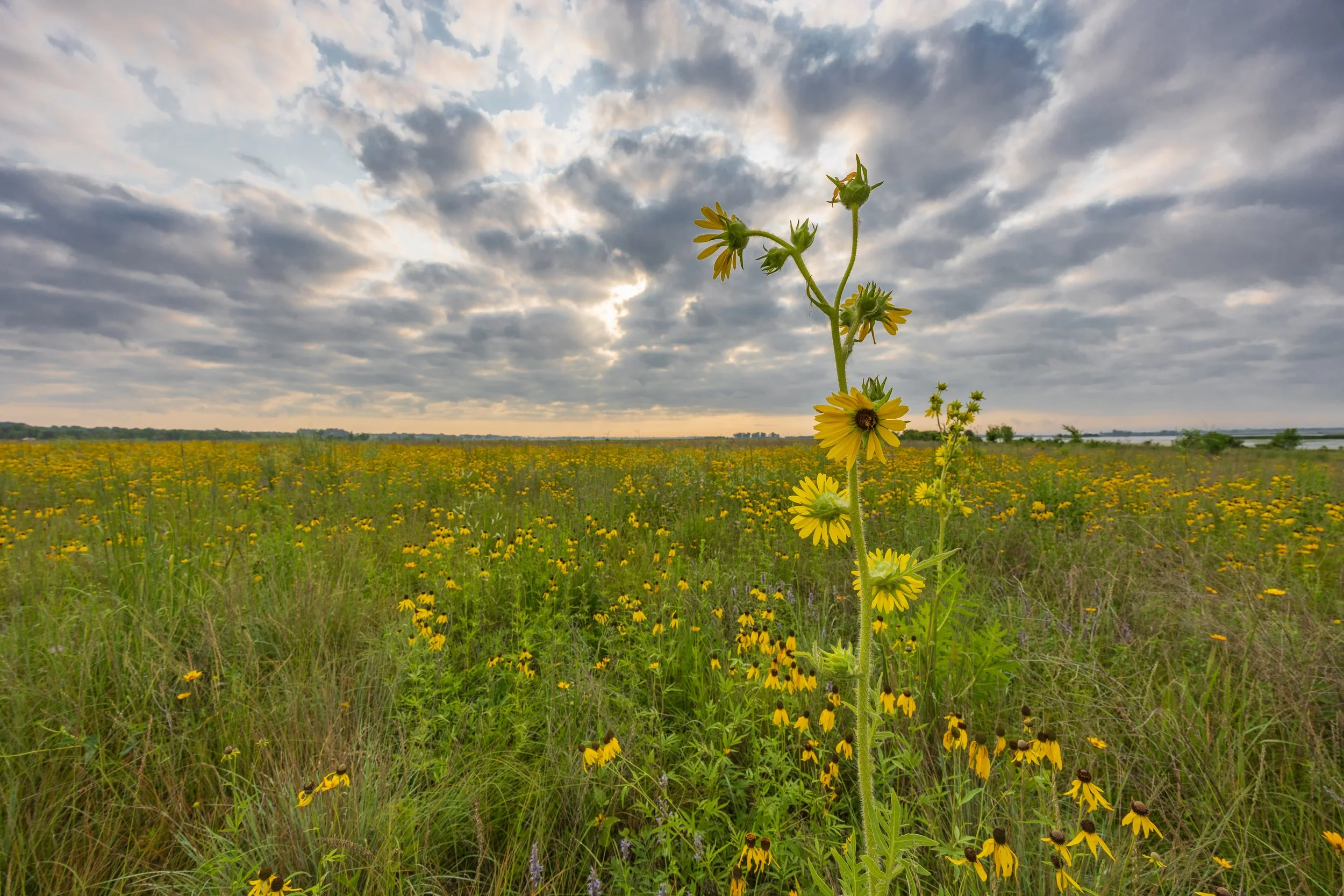 Image 3 of 5
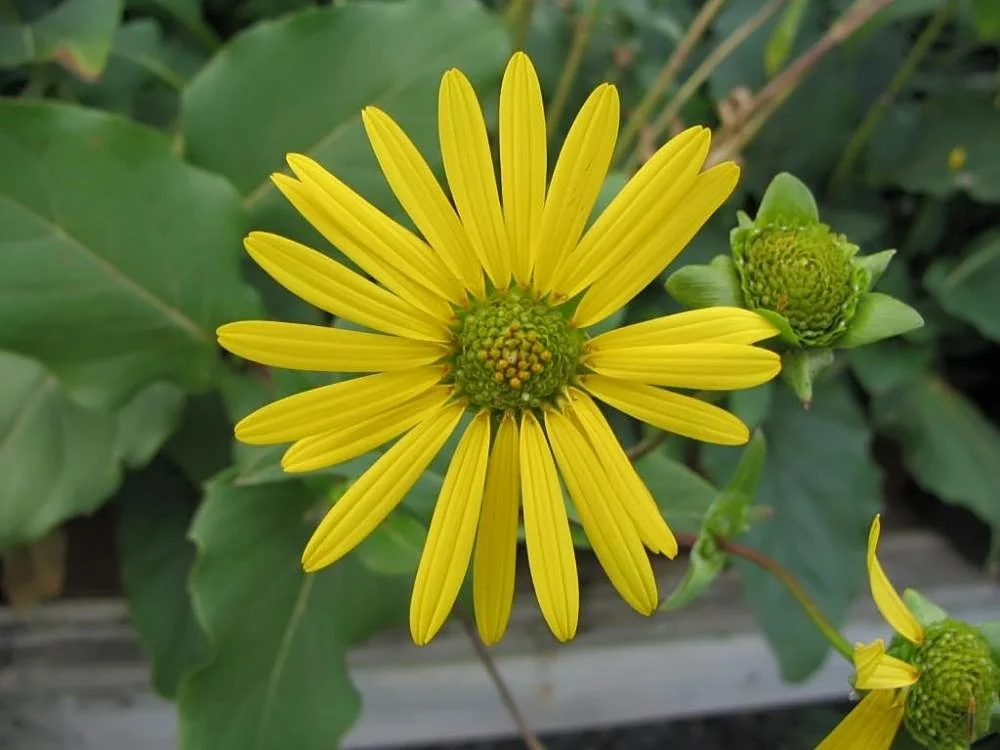 Image 4 of 5
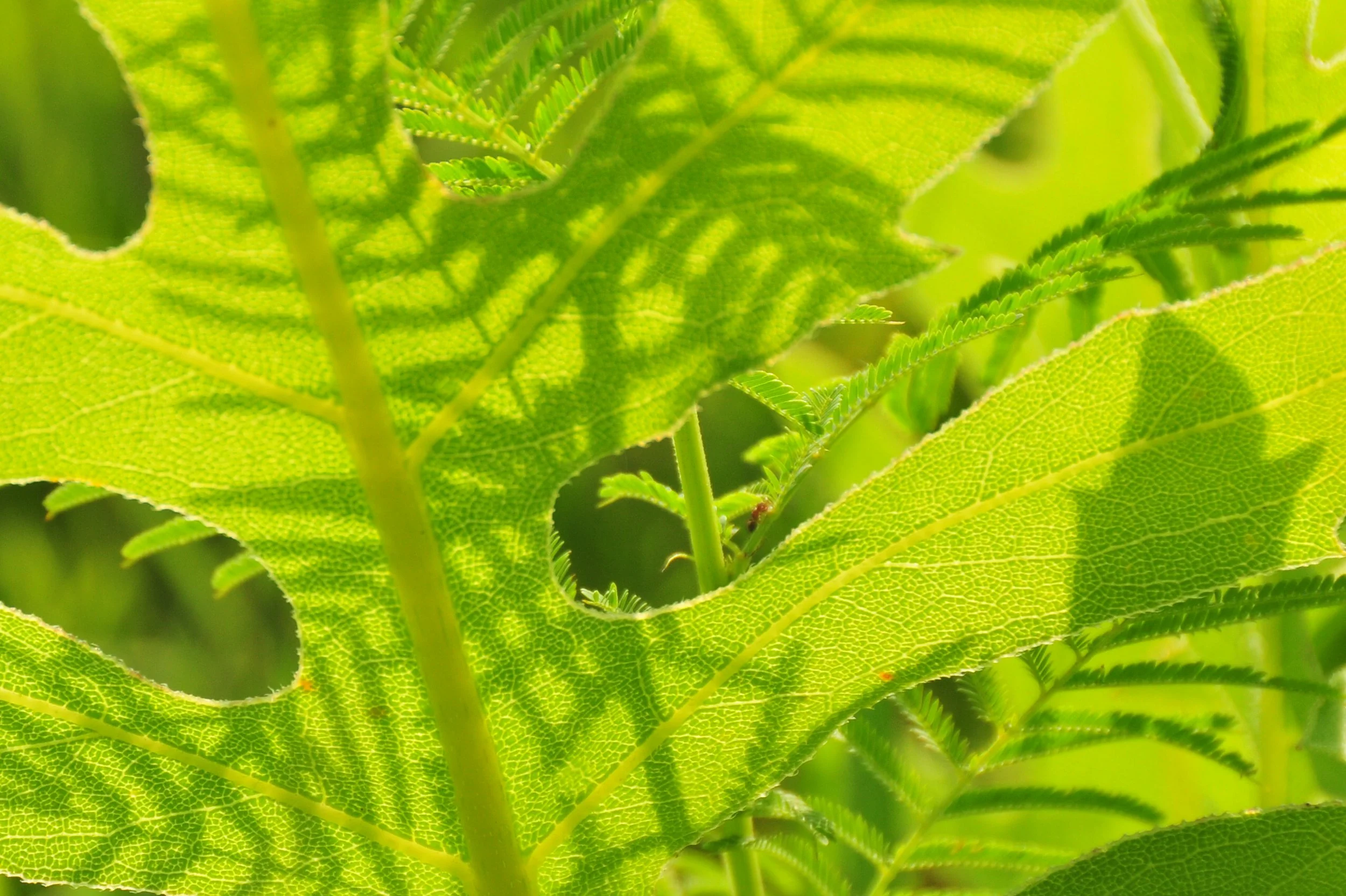 Image 5 of 5
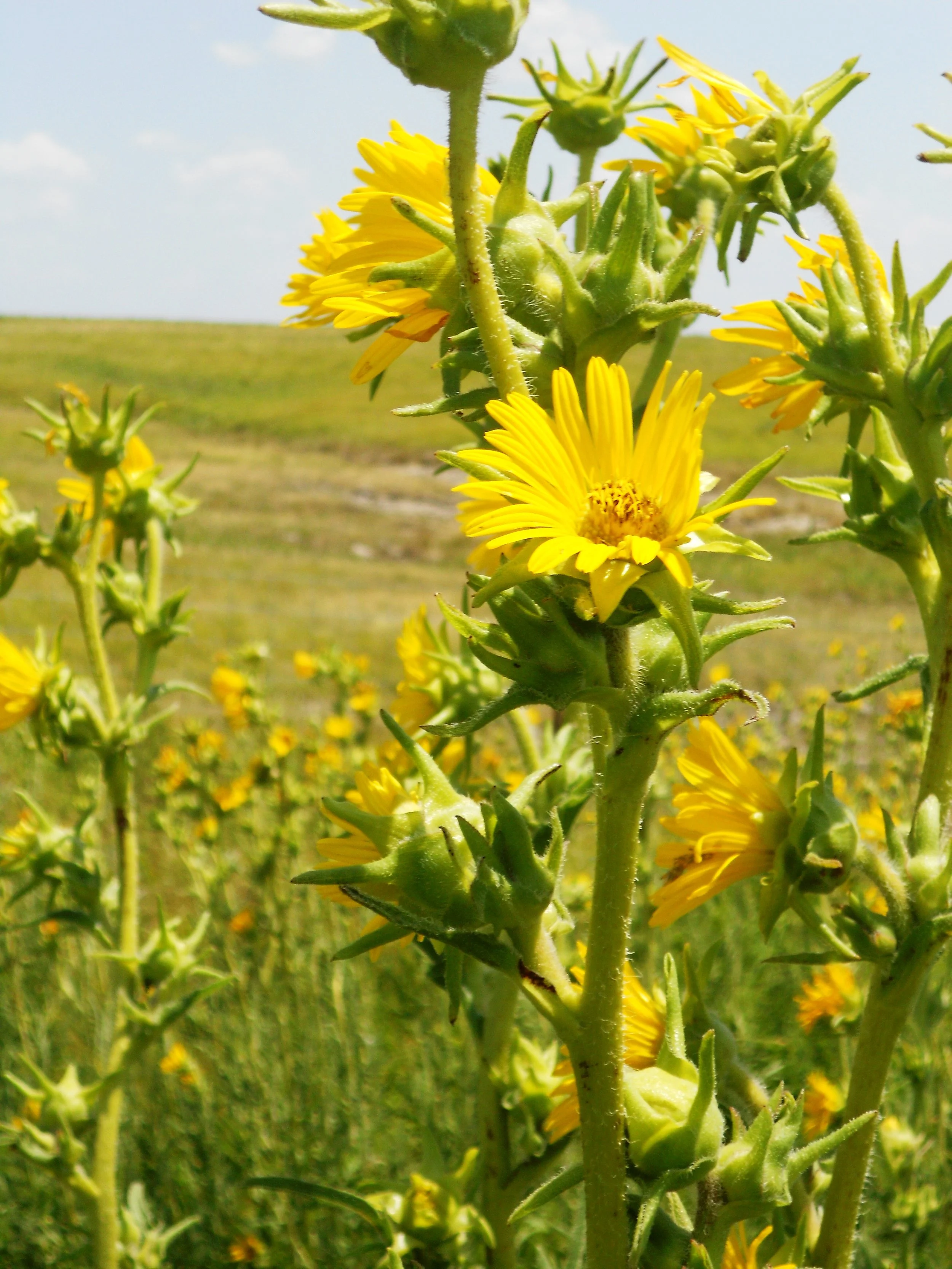
An architectural giant of the prairie, Compass Plant stands tall with sunflower-like yellow blooms atop rugged stems and deeply divided, sandpapery leaves that align north to south—an adaptation that inspired its name. Its commanding stature brings drama and structure to open landscapes.
Native to tallgrass prairies, this long-lived perennial thrives in full sun and well-drained soils, developing a deep taproot that endures drought. Once established, it forms a majestic focal point in naturalized plantings.
Identification : Tall stems with large yellow flowers; deeply lobed basal leaves that orient north-south; coarse texture.
Bloom Time: July–September
Mature Height6–10 feet.
Growth Rate: Slow to establish; long-lived.
Site Preferences: Full sun; dry to medium soils; tolerates clay and loam.
Wildlife Value : Supports native bees and butterflies; seedheads attract birds.
Cultural Presence: Iconic prairie species for restoration and large native gardens; excellent for structural interest and pollinator habitat.
An architectural giant of the prairie, Compass Plant stands tall with sunflower-like yellow blooms atop rugged stems and deeply divided, sandpapery leaves that align north to south—an adaptation that inspired its name. Its commanding stature brings drama and structure to open landscapes.
Native to tallgrass prairies, this long-lived perennial thrives in full sun and well-drained soils, developing a deep taproot that endures drought. Once established, it forms a majestic focal point in naturalized plantings.
Identification : Tall stems with large yellow flowers; deeply lobed basal leaves that orient north-south; coarse texture.
Bloom Time: July–September
Mature Height6–10 feet.
Growth Rate: Slow to establish; long-lived.
Site Preferences: Full sun; dry to medium soils; tolerates clay and loam.
Wildlife Value : Supports native bees and butterflies; seedheads attract birds.
Cultural Presence: Iconic prairie species for restoration and large native gardens; excellent for structural interest and pollinator habitat.