Quantities: Individual Quart Sized Potted Plants and 38-Cell Plug Single Species Flats
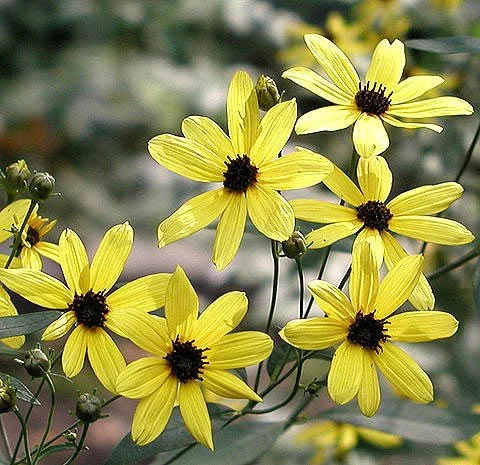
A graceful prairie favorite, Gray-Headed Coneflower rises tall with golden petals that drape elegantly downward from a distinctive gray-brown central cone. Its blooms dance above the grasses in midsummer, creating dynamic movement and light.
This adaptable species thrives in full sun and dry to medium soils, where it forms sturdy colonies that return reliably year after year. Its deep roots make it drought-tolerant and ideal for prairie restorations.
Identification / Key Features: Drooping yellow petals around an elongated gray-brown cone; coarse foliage; tall, slender stems.
Bloom Time: July-September
Mature Height / Size: 3–5 feet.
Growth Rate: Moderate.
Light / Soil / Site Preferences: Full sun; dry to medium soils; drought tolerant.
Wildlife Value / Ecological Role: Nectar source for bees and butterflies; seeds attract goldfinches.
Uses / Economic / Cultural: Excellent for meadows and native borders; long-lasting cut flower.
Quantities: Individual Quart Sized Potted Plants and 38-Cell Plug Single Species Flats
A graceful prairie favorite, Gray-Headed Coneflower rises tall with golden petals that drape elegantly downward from a distinctive gray-brown central cone. Its blooms dance above the grasses in midsummer, creating dynamic movement and light.
This adaptable species thrives in full sun and dry to medium soils, where it forms sturdy colonies that return reliably year after year. Its deep roots make it drought-tolerant and ideal for prairie restorations.
Identification / Key Features: Drooping yellow petals around an elongated gray-brown cone; coarse foliage; tall, slender stems.
Bloom Time: July-September
Mature Height / Size: 3–5 feet.
Growth Rate: Moderate.
Light / Soil / Site Preferences: Full sun; dry to medium soils; drought tolerant.
Wildlife Value / Ecological Role: Nectar source for bees and butterflies; seeds attract goldfinches.
Uses / Economic / Cultural: Excellent for meadows and native borders; long-lasting cut flower.

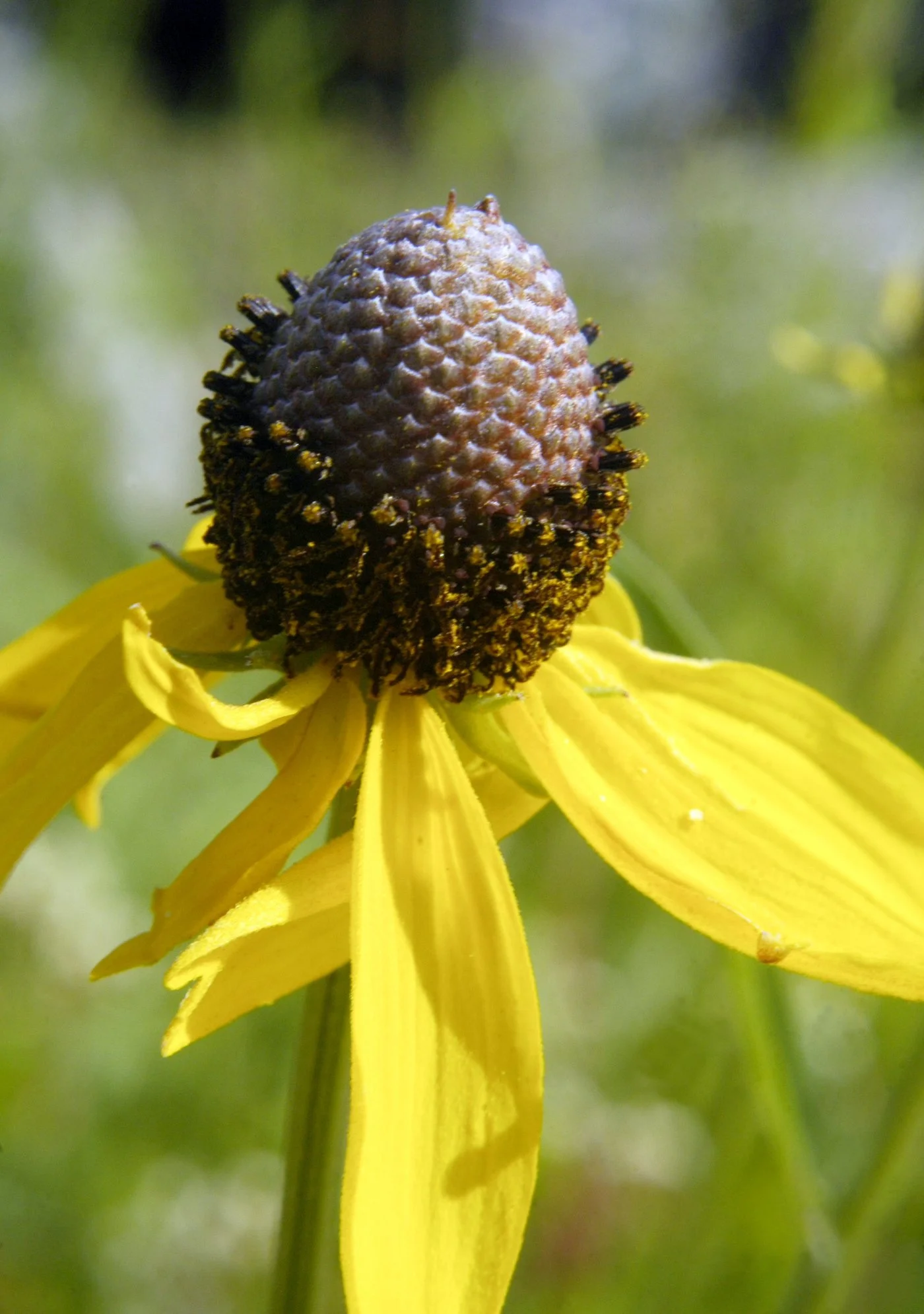 Image 1 of 7
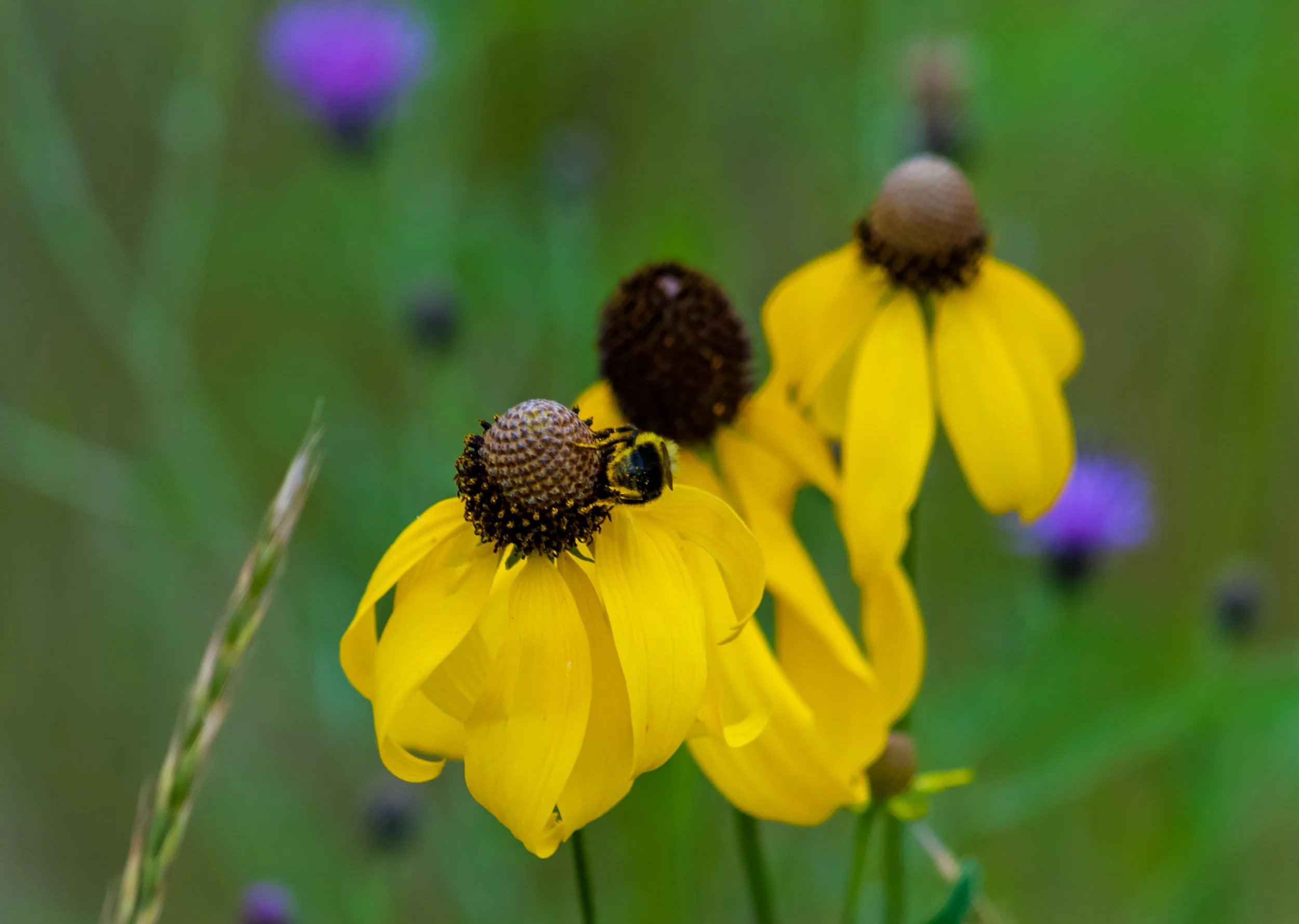 Image 2 of 7
 Image 3 of 7
 Image 4 of 7
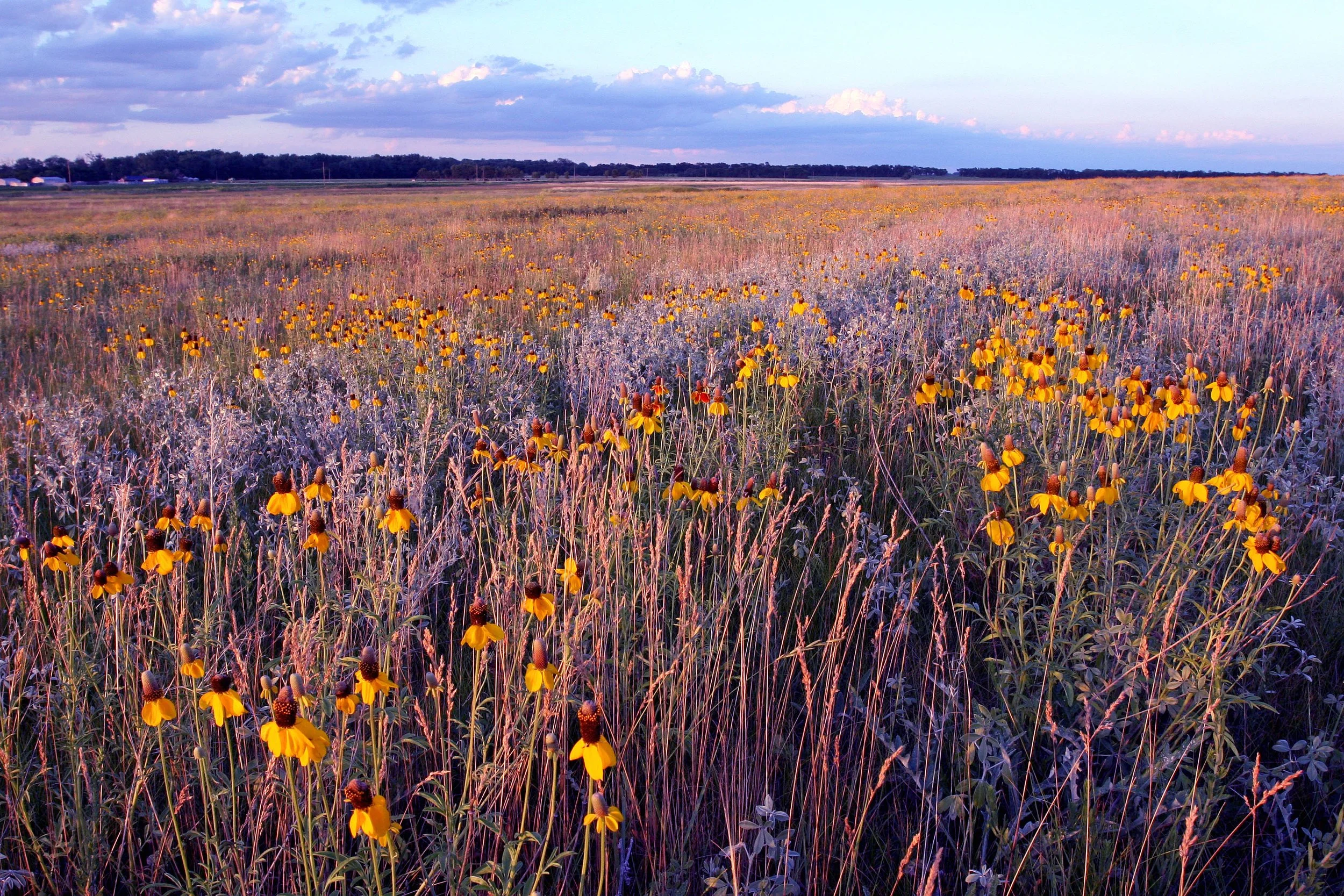 Image 5 of 7
 Image 6 of 7
 Image 7 of 7