Quantity (per bundle) 25
Size (12-24”)
A striking and adaptable native shrub, Winterberry (also known as Michigan Holly) is celebrated for its brilliant red berries that illuminate the landscape through fall and winter, long after the leaves have dropped. In summer, its glossy green foliage and subtle white flowers add quiet beauty, while its vivid fruit provides stunning seasonal contrast against snow or bare branches.
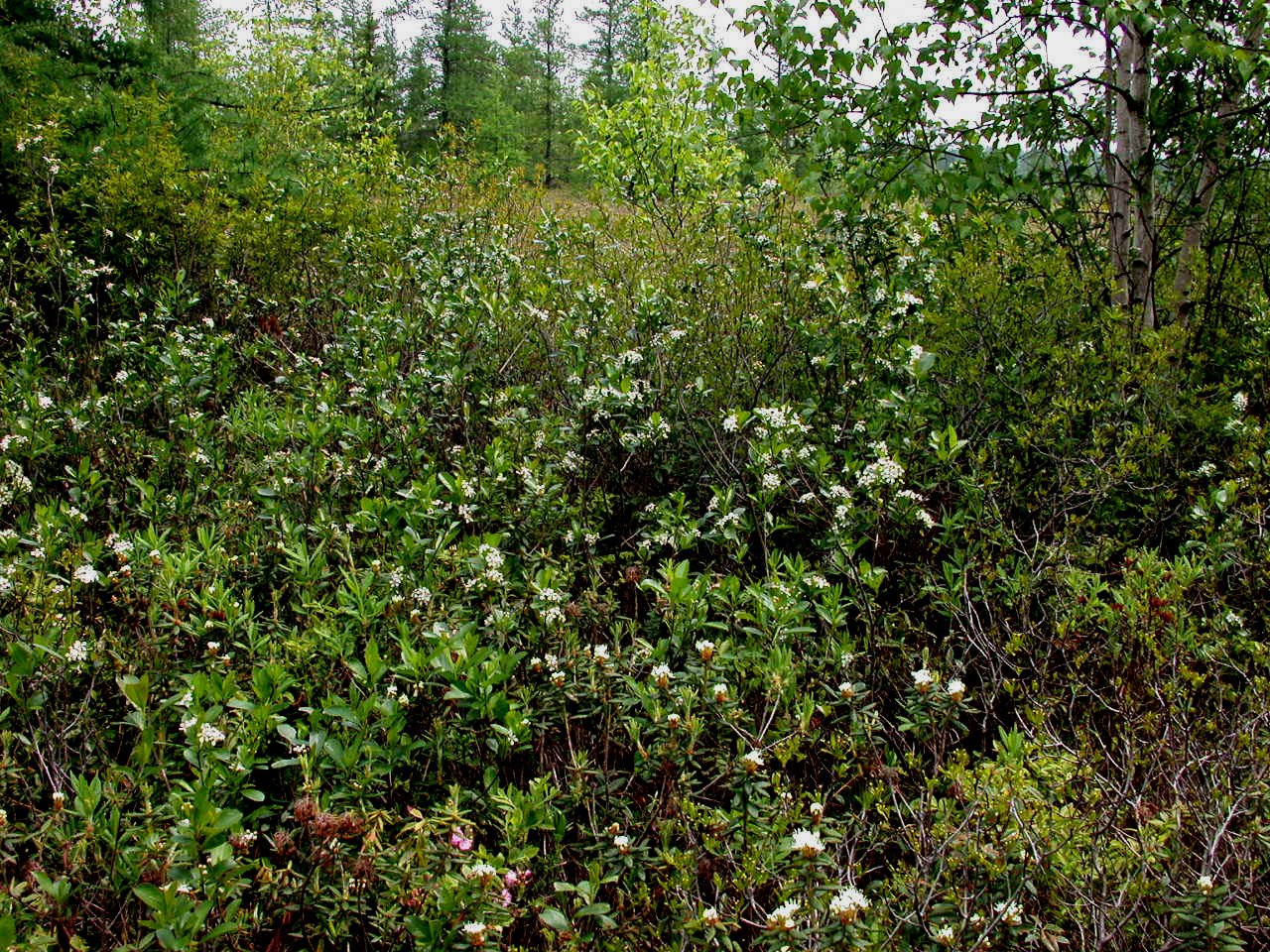
Well-suited to Northern Michigan (Zone 5a), Winterberry thrives in full sun to partial shade and moist, acidic soils. It naturally grows along wetlands, streambanks, and woodland edges but adapts well to gardens and rainwater sites. For best fruit production, both male and female plants should be planted nearby.
Ecologically, Winterberry is a valuable resource for wildlife—its flowers attract pollinators in spring, and its berries provide essential winter food for birds and small mammals. Hardy, moisture-tolerant, and visually captivating, Winterberry brings four-season beauty and ecological benefit to Michigan’s native landscapes.
Identification / Key Features: Deciduous shrub with simple, serrated leaves that turn yellow in fall. Produces bright red berries in fall that persist into winter. Bark is smooth and gray-brown.
Mature Height / Size: 6–10 feet.
Growth Rate: Moderate.
Light / Soil / Site Preferences: Full sun to partial shade; prefers moist, acidic soils and can tolerate wet conditions.
Wildlife Value / Ecological Role: Berries eaten by birds and small mammals; dense branching provides winter cover.
Uses / Economic / Cultural: Popular ornamental for winter interest; berries used in holiday decorations.
Quantity (per bundle) 25
Size (12-24”)
A striking and adaptable native shrub, Winterberry (also known as Michigan Holly) is celebrated for its brilliant red berries that illuminate the landscape through fall and winter, long after the leaves have dropped. In summer, its glossy green foliage and subtle white flowers add quiet beauty, while its vivid fruit provides stunning seasonal contrast against snow or bare branches.
Well-suited to Northern Michigan (Zone 5a), Winterberry thrives in full sun to partial shade and moist, acidic soils. It naturally grows along wetlands, streambanks, and woodland edges but adapts well to gardens and rainwater sites. For best fruit production, both male and female plants should be planted nearby.
Ecologically, Winterberry is a valuable resource for wildlife—its flowers attract pollinators in spring, and its berries provide essential winter food for birds and small mammals. Hardy, moisture-tolerant, and visually captivating, Winterberry brings four-season beauty and ecological benefit to Michigan’s native landscapes.
Identification / Key Features: Deciduous shrub with simple, serrated leaves that turn yellow in fall. Produces bright red berries in fall that persist into winter. Bark is smooth and gray-brown.
Mature Height / Size: 6–10 feet.
Growth Rate: Moderate.
Light / Soil / Site Preferences: Full sun to partial shade; prefers moist, acidic soils and can tolerate wet conditions.
Wildlife Value / Ecological Role: Berries eaten by birds and small mammals; dense branching provides winter cover.
Uses / Economic / Cultural: Popular ornamental for winter interest; berries used in holiday decorations.

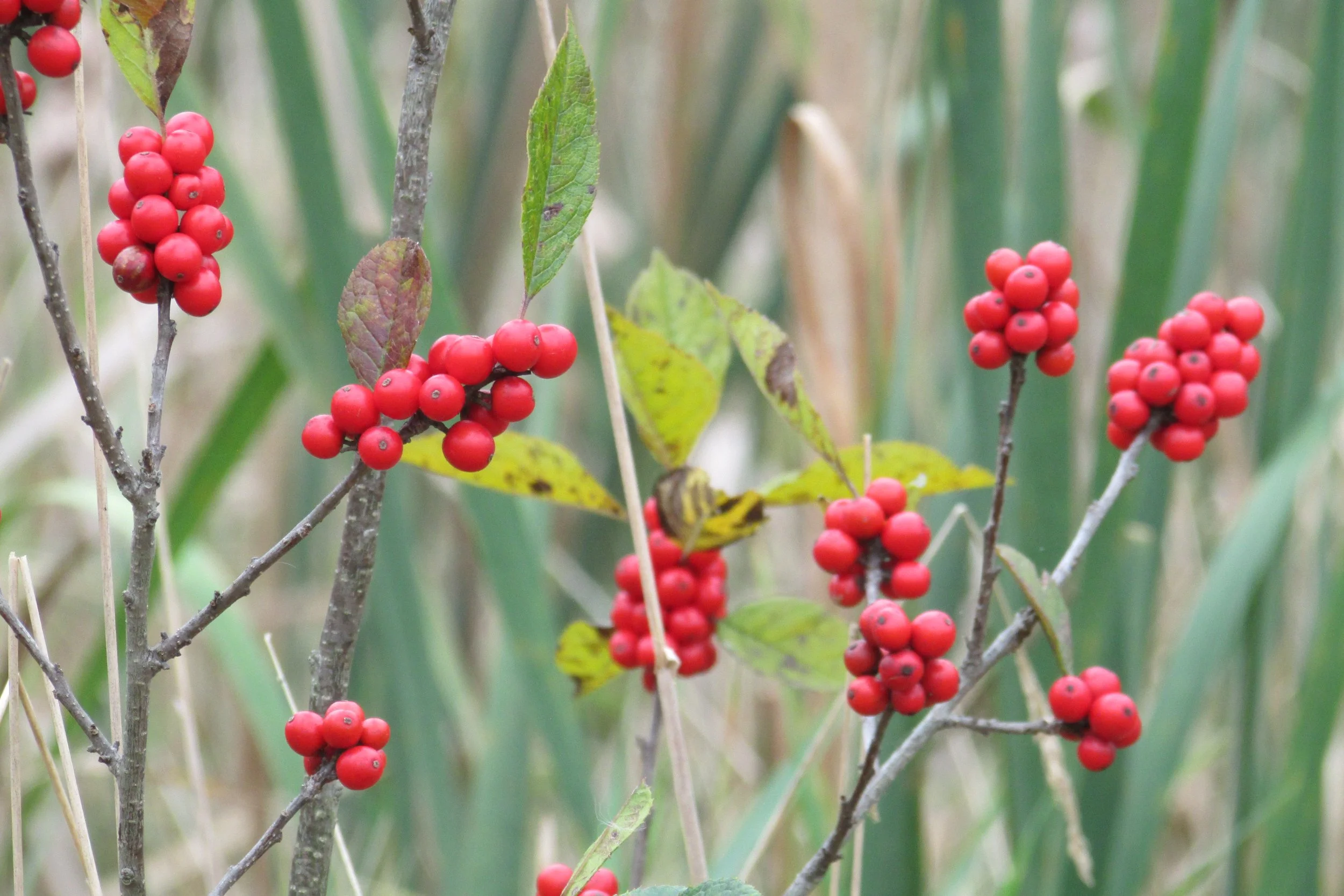 Image 1 of 8
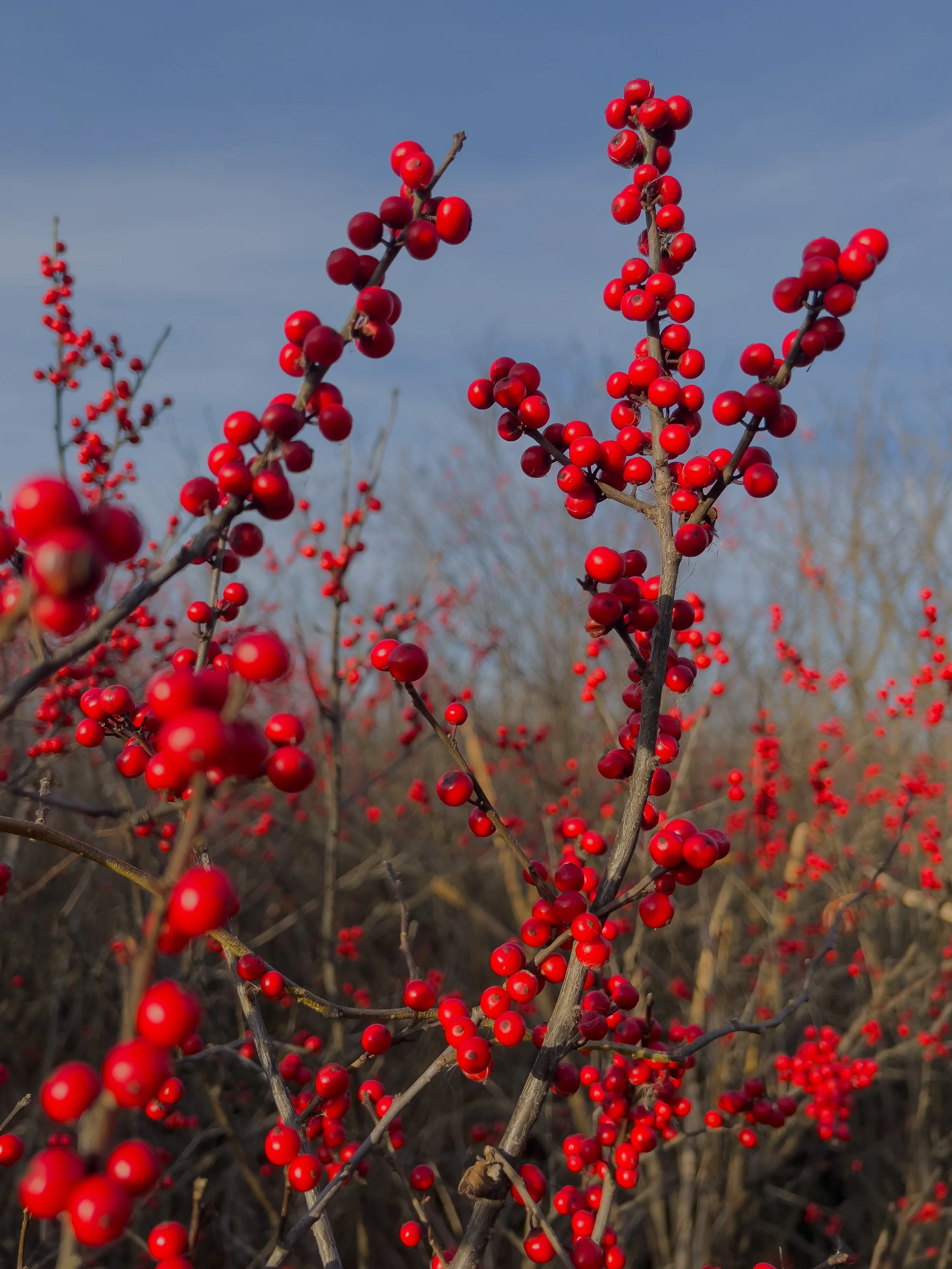 Image 2 of 8
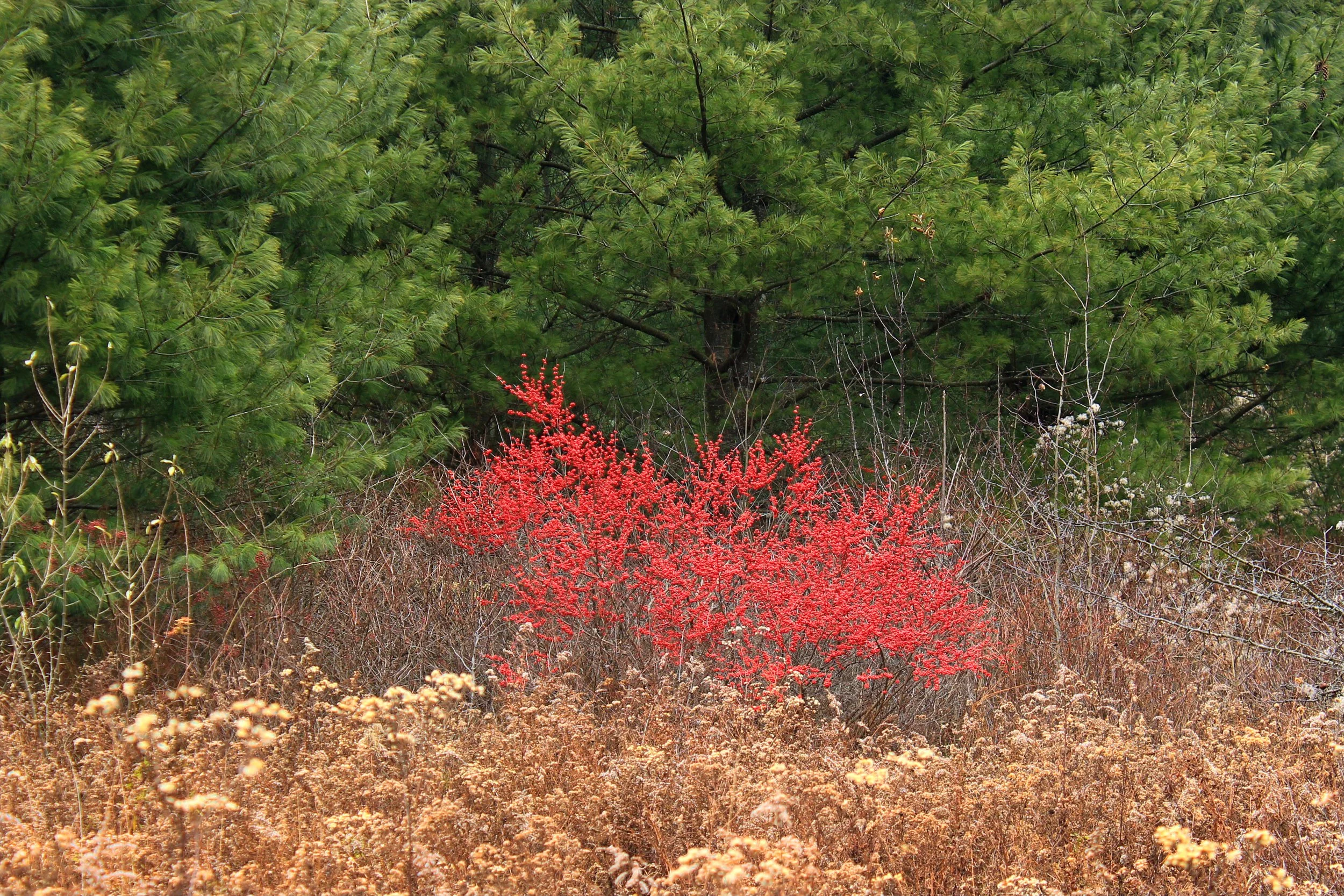 Image 3 of 8
 Image 4 of 8
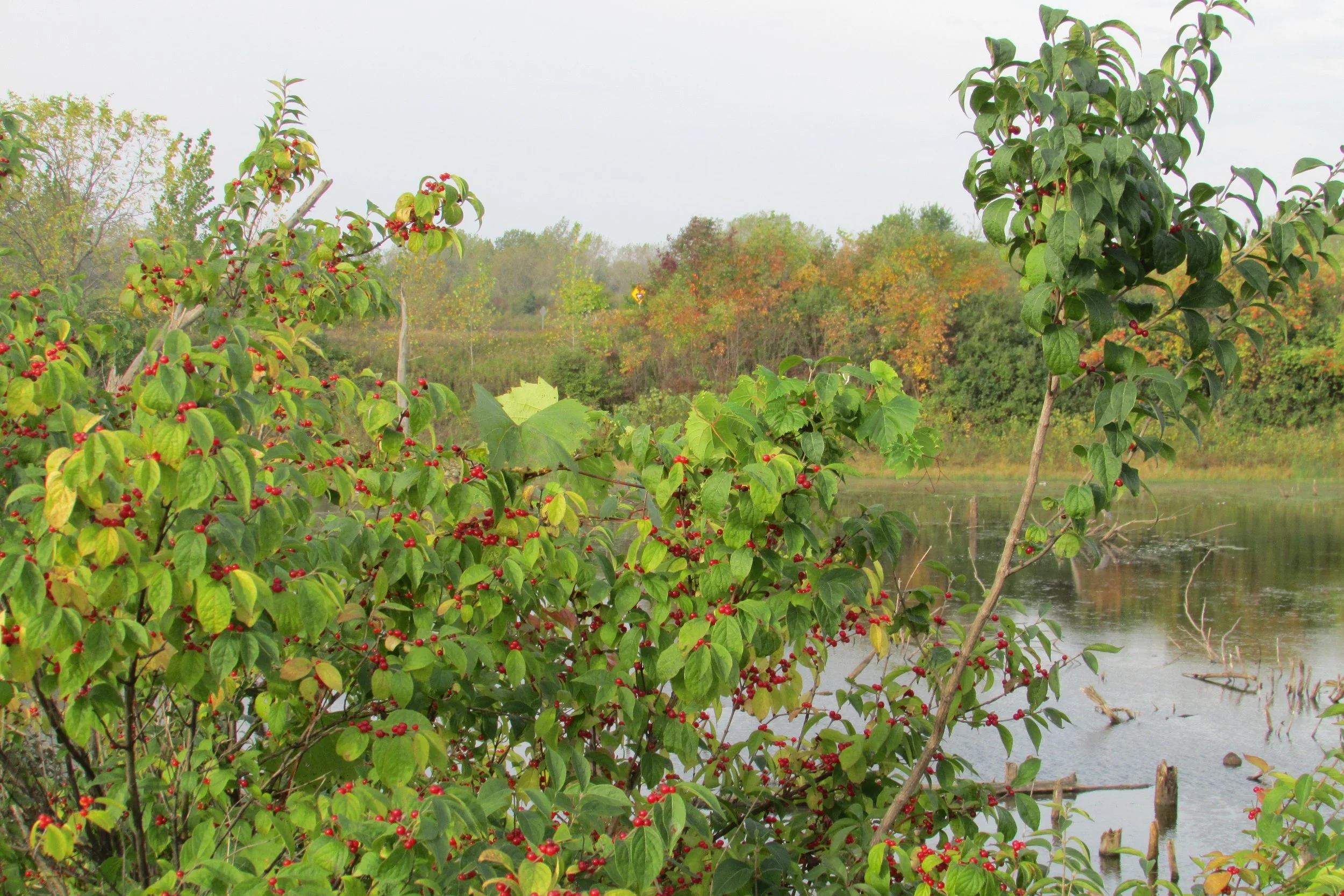 Image 5 of 8
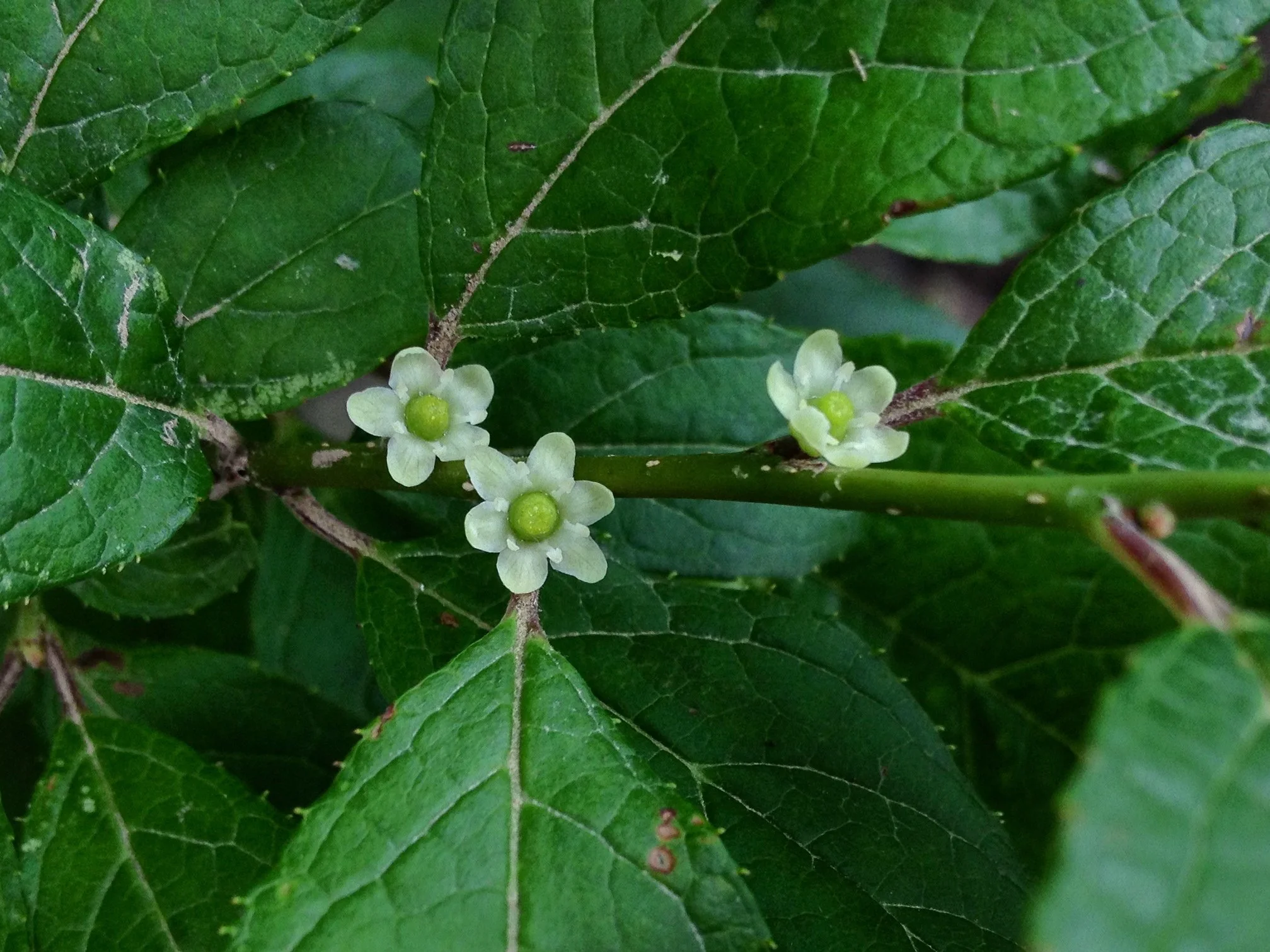 Image 6 of 8
 Image 7 of 8
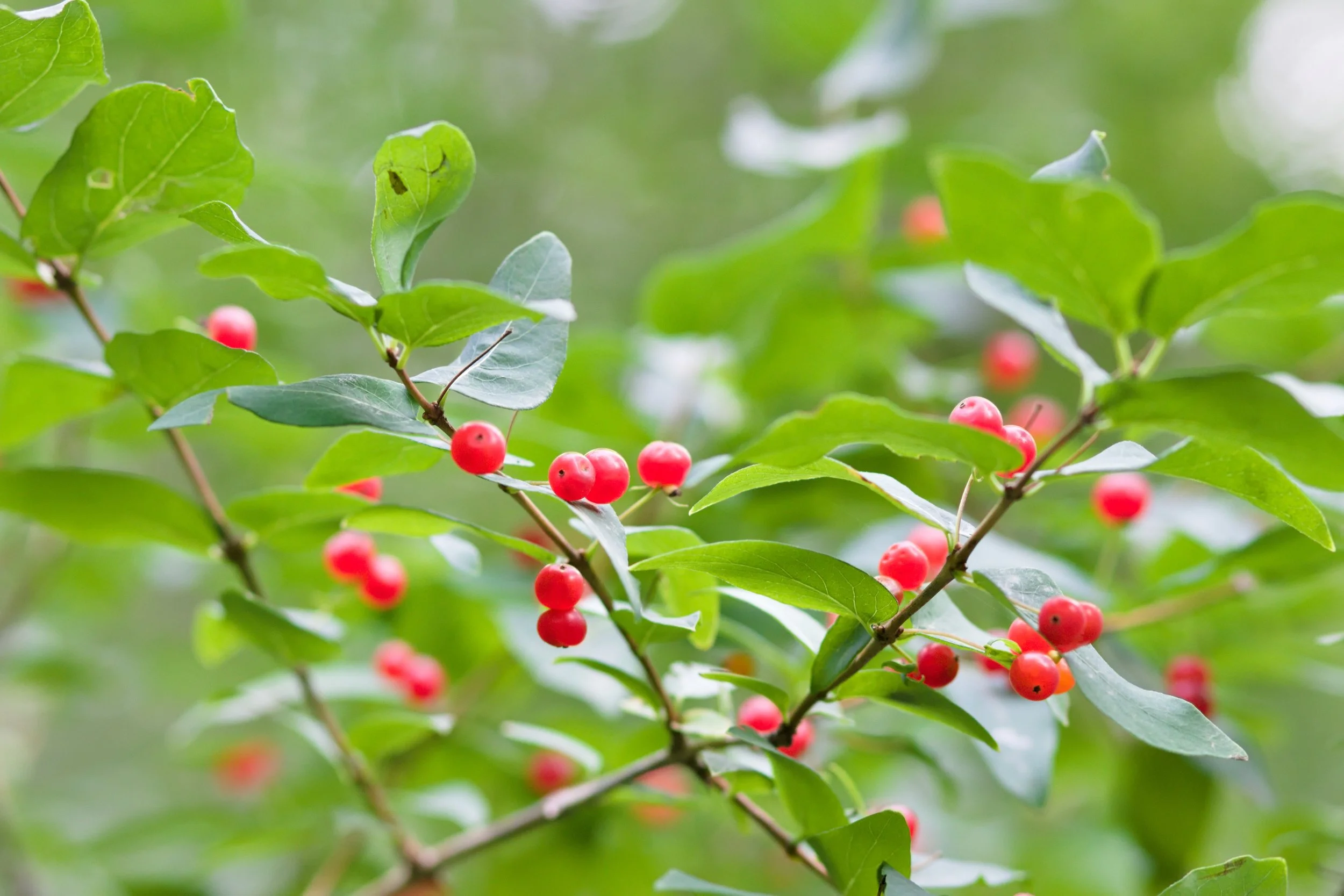 Image 8 of 8